Tonight I headed downtown with Jana and her colleague and drinking partner, Phillipe, who is from France, and we went to the trendy Shibuya area. Shibuya is popular with young people as a shopping mecca, and it also happens to have a small cinema that was showing an interesting film by a Japanese director who was studying the evolution of reggae in Jamaica.
Shibuya is most famous for having the world's busiest pedestrian crossing in the world. At Hachiko Square, seven major streets intersect, and it is also a major intersection of human traffic moving in every direction. I even took a little video of the famous crossing to show you.
As Rupee once sang.... 'WHOOA! LOOK AT PEEEEEEEOPLE!!!'
Did you notice at the very end of the video, at the right hand bottom corner, a guy runs out into the intersection just as the light turns green, and almost gets hit by a motocycle!!!! Heh heh. Good stuff.
Saturday, November 18, 2006


Thursday, November 16, 2006
Eww.
I recently had the joy of experiencing my first critter -- a black, horrid looking Japanese cockroach. I woke up one morning, climbed down from my loft, walked into the kitchen to turn on the kettle for coffee, and when I turned on the light, there it was! Sitting on a plate from last night's dinner, munching away on some crumbs.
I looked down at it, it looked up at me, and mid nibble said, 'ohayo!' which is Japanese for 'good morning'. The f*cker didn't even run away! I tried to kill it, but obviously couldn't do so without breaking the plate it was sitting on, so it got away temporarily.
Later it resurfaced, this time sitting quietly on the floor, and it came face to face with the bottom of my boot. I thought it was kind of weird that it didn't even try to escape or run for its life. A reliable source who has been here for 8 years has told me that Japanese cockroaches are surprisingly docile, and accept their death with honor, samurai-style. But now, it is dead. Thank god.
Anyways, the video link below is a real hoot, I stumbled upon it randomly today. I'd love to put the code on the blog but I'm not to keen on stealing from YouTube. So just click on the link for a truly scary video. My cockroach incident certainly cannot compare!!
Click to watch: Japanese Subway Roaches
I looked down at it, it looked up at me, and mid nibble said, 'ohayo!' which is Japanese for 'good morning'. The f*cker didn't even run away! I tried to kill it, but obviously couldn't do so without breaking the plate it was sitting on, so it got away temporarily.
Later it resurfaced, this time sitting quietly on the floor, and it came face to face with the bottom of my boot. I thought it was kind of weird that it didn't even try to escape or run for its life. A reliable source who has been here for 8 years has told me that Japanese cockroaches are surprisingly docile, and accept their death with honor, samurai-style. But now, it is dead. Thank god.
Anyways, the video link below is a real hoot, I stumbled upon it randomly today. I'd love to put the code on the blog but I'm not to keen on stealing from YouTube. So just click on the link for a truly scary video. My cockroach incident certainly cannot compare!!
Click to watch: Japanese Subway Roaches
Wednesday, November 15, 2006
I feel the earth move under my feet
Here's a scary statistic for you --
20% of the world's earthquakes take place in Japan!
The Japanese archipelago is located in an area where four continental and oceanic plates meet.

Sometimes these plates get frisky and rub up on each other. Sometimes there is some pushing and shoving too, like aggressive drunks in a bar. This is the cause for frequent earthquakes and the presence of many volcanoes and hot springs across Japan. The beautiful and iconic Mount Fuji is actually not a mountain at all, but rather a dormant volcano, and is Japan's highest point. Fuji has not erupted since 1707.
Earthquakes, however, really do happen ALL THE FREAKIN TIME. You sort of get used to it... Sort of. I still get nervous every time I feel one. One second you're peacefully making a sandwich, humming to yourself in the kitchen, and the next second you realize the earth is swaying, swaying, swaying below your feet.
In September there was a 4.2 magnitude quake, and I was in school in the middle of the class. I held on to the table and looked around nervously, but the kids didn't even BLINK! They just chatted like normal through the whole thing as though nothing were happening. I guess they are so accustomed to it, it does not bother them at all.
Today one was measured just off the north coast of Japan's most northern island, Hokkaido, with a 8.1 magnitutde. That is freakin HUGE.

There have been some tsunamis occuring, but I live quite far inland, so I won't be affected at all.
The last major earthquake to hit Tokyo was in 1923, where over 100,000 people died and a large area of the city was destroyed. The scary thing is that they think massive quakes like this happen every 70 years or so. You do the math. Perhaps I chose a bad time to come to Japan!
In Japan, it is sort of scary that earthquakes are simply accepted as an inevitable fact of life. It is not a question of if, but rather WHEN. They all know it is bound to happen - THE BIG ONE - and that hundreds of thousands of people will die. Sort of a strange reality, no? To KNOW without a doubt that it WILL happen, and that there is pretty much nothing you can do about it. 30 million people live in Tokyo today. If tomorrow The Big One hits, can you imagine the devastation? But life just goes on as normal... I suppose all I can do is hope that it does not take place while I am here!
20% of the world's earthquakes take place in Japan!
The Japanese archipelago is located in an area where four continental and oceanic plates meet.
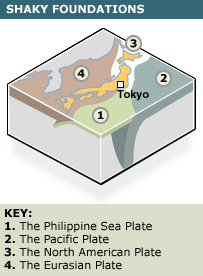
Sometimes these plates get frisky and rub up on each other. Sometimes there is some pushing and shoving too, like aggressive drunks in a bar. This is the cause for frequent earthquakes and the presence of many volcanoes and hot springs across Japan. The beautiful and iconic Mount Fuji is actually not a mountain at all, but rather a dormant volcano, and is Japan's highest point. Fuji has not erupted since 1707.
Earthquakes, however, really do happen ALL THE FREAKIN TIME. You sort of get used to it... Sort of. I still get nervous every time I feel one. One second you're peacefully making a sandwich, humming to yourself in the kitchen, and the next second you realize the earth is swaying, swaying, swaying below your feet.
In September there was a 4.2 magnitude quake, and I was in school in the middle of the class. I held on to the table and looked around nervously, but the kids didn't even BLINK! They just chatted like normal through the whole thing as though nothing were happening. I guess they are so accustomed to it, it does not bother them at all.
Today one was measured just off the north coast of Japan's most northern island, Hokkaido, with a 8.1 magnitutde. That is freakin HUGE.
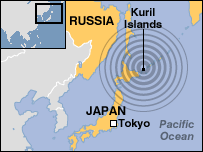
There have been some tsunamis occuring, but I live quite far inland, so I won't be affected at all.
The last major earthquake to hit Tokyo was in 1923, where over 100,000 people died and a large area of the city was destroyed. The scary thing is that they think massive quakes like this happen every 70 years or so. You do the math. Perhaps I chose a bad time to come to Japan!
In Japan, it is sort of scary that earthquakes are simply accepted as an inevitable fact of life. It is not a question of if, but rather WHEN. They all know it is bound to happen - THE BIG ONE - and that hundreds of thousands of people will die. Sort of a strange reality, no? To KNOW without a doubt that it WILL happen, and that there is pretty much nothing you can do about it. 30 million people live in Tokyo today. If tomorrow The Big One hits, can you imagine the devastation? But life just goes on as normal... I suppose all I can do is hope that it does not take place while I am here!
Monday, November 13, 2006
Funny food
To be quite honest, half the time I'm not sure exactly what I'm eating. The Japanese have a habit of putting really badly translated English onto damn near everything, but still, going to the grocery can be a difficult, frustrating and endlessly amusing task when you don't know what the hell it is sitting on the shelf! Often I take things home and try them out without knowing the name or the ingredients. Sometimes it tastes good... Sometimes I'm not sure what it tastes like... Sometimes I throw it away. No wonder I'm losing weight!
Anyways, because I always carry my trusty digi-cam around with me, I recently snapped some pictures of some funny food that I thought you readers might appreciate.
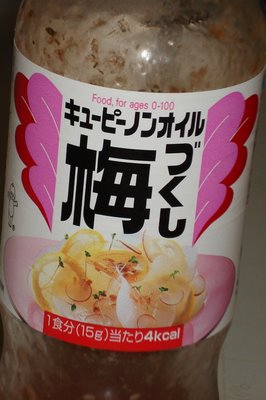
This is a bottle of ume (plum) salad dressing. Note at the top, it says, 'Food, for ages 0 - 100'. Apparently ume dressing is appropriate for both the pre-natal and the ancient. But once you turn 101, you better stop eating it. Or you die.
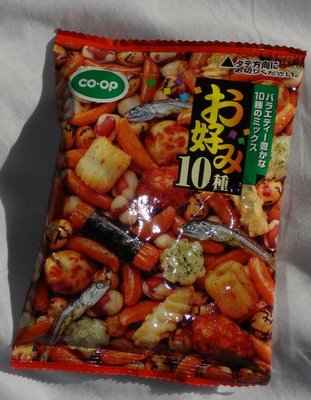
This stuff is actually a pretty tasty treat, and yes, it does have whole fish in it. Pop the whole thing in your mouth. Crunch crunch crunch!

Ever wondered why Japanese people are so slim? Two words - portion control. A 'loaf' of bread ONLY HAS 6 SLICES!
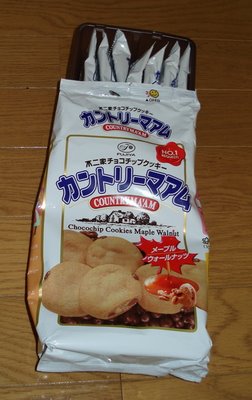
This is again portion control - EACH COOKIE is individually wrapped! In fact, this is quite normal in Japan, every damn thing comes hermetically sealed three times over. I am sure they would shrink wrap each peanut if they could. I'm not sure what it is, this obsession with individual wrapping, but it sure does cause a lot of waste.

Ok ok... So this isn't food at all... But I thought it was quite amusing anyways. I saw it in the 100Â¥ store today. Apparently it's for women whose husbands and sons keep pissing on the toilet seat -- you put the sticker of the fly or the bullseye to train their aim! Note the angry housewife, and the apologetic husband and son. Also, at the bottom you will see they have a visual of both types of toilets - both the sitting type, and the squatting type, the same kind I encountered in Turkey!

Ah heck, since I've already deviated from the topic of food, I'll just keep going. This is a shot of my laundry machine. Please note the brand name. ''Fuzzy Logic''. That sounds about right to me!
Anyways, because I always carry my trusty digi-cam around with me, I recently snapped some pictures of some funny food that I thought you readers might appreciate.
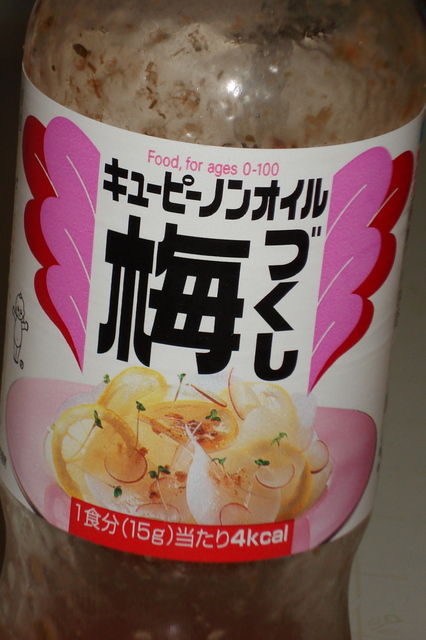
This is a bottle of ume (plum) salad dressing. Note at the top, it says, 'Food, for ages 0 - 100'. Apparently ume dressing is appropriate for both the pre-natal and the ancient. But once you turn 101, you better stop eating it. Or you die.

This stuff is actually a pretty tasty treat, and yes, it does have whole fish in it. Pop the whole thing in your mouth. Crunch crunch crunch!

Ever wondered why Japanese people are so slim? Two words - portion control. A 'loaf' of bread ONLY HAS 6 SLICES!
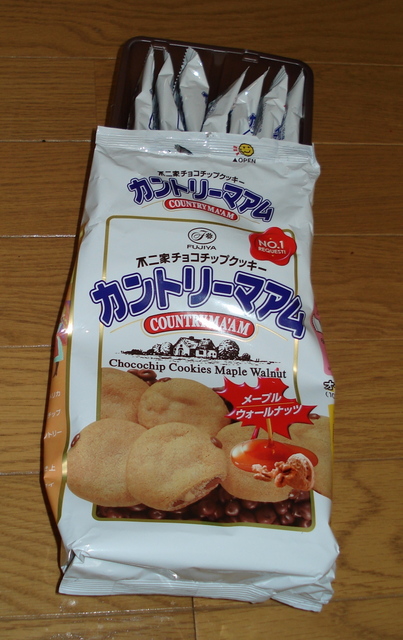
This is again portion control - EACH COOKIE is individually wrapped! In fact, this is quite normal in Japan, every damn thing comes hermetically sealed three times over. I am sure they would shrink wrap each peanut if they could. I'm not sure what it is, this obsession with individual wrapping, but it sure does cause a lot of waste.
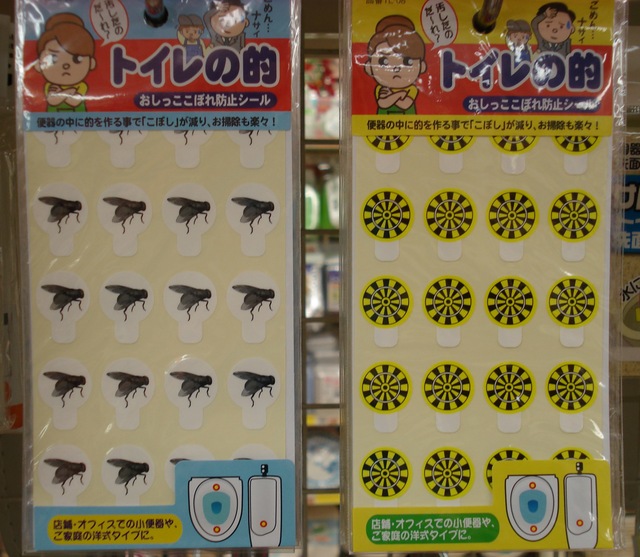
Ok ok... So this isn't food at all... But I thought it was quite amusing anyways. I saw it in the 100Â¥ store today. Apparently it's for women whose husbands and sons keep pissing on the toilet seat -- you put the sticker of the fly or the bullseye to train their aim! Note the angry housewife, and the apologetic husband and son. Also, at the bottom you will see they have a visual of both types of toilets - both the sitting type, and the squatting type, the same kind I encountered in Turkey!
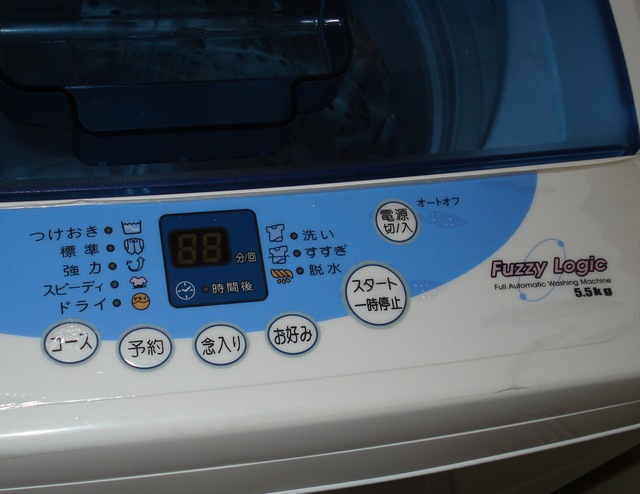
Ah heck, since I've already deviated from the topic of food, I'll just keep going. This is a shot of my laundry machine. Please note the brand name. ''Fuzzy Logic''. That sounds about right to me!
Friday, November 10, 2006
Emily Sensei
Ive realized that I have yet to talk about what I'm really in Japan for - to TEACH! I've been teaching at what is known as an 'eikaiwa', or conversation school. All Japanese students get six years of English instruction in their schools, yet everyone sends their kids to eikaiwas for extra practice. And I can say that teaching has certainly opened my eyes to various aspects of Japanese society, both good and bad.
My only kindergarten class is a real trip. It took me a few weeks to figure out exactly what to do with three little girls! Now I know to just play with them for a while, let them go crazy, and then when they've spent some energy, focus on a lesson, which is usually teaching a set of words. For example, if we do 'D', they learn 'desk, dog, dinosaur', then practice writing the words, and counting. The tiny one, Aika, is only 3, and I can't imagine why her mom brings her to English class. A lot of the time, the moms are rich, bored housewives who like boasting that their toddler is learning English. Hey, whatever makes them happy!
The kids come for group classes, and they are a lot of fun because you can play loads of games with them. My favorite game is 'karuta', where you have these flashcards with pictures of vocabulary, and you lay them on the table, and give the kids fly swatters, and then you call out, 'crayon!' and they have to smack the picture of a crayon. Kids seem to be competitive by nature, so games are good. Plus they have short attention spans, so I don't expect them to sit and study for 50 minutes straight. Sometimes the kids are really sweet. Sometimes they are sort of rude. Sometimes they are kind of nasty and snotty and gross and pick their noses! I wash my hands after these classes.
After the kids come the young teens, which are my least favorite, and most difficult students. And this is where the scary part of Japanese society rears its ugly head. There is a massive difference between kids who are ten and kids who are 13 because when they finish junior high, and move into high school, the pressure begins. In Japanese society, there is immense pressure to conform, yet to also be better than everyone else. Parents make their kids join every possibly club, send them to extra lessons and 'cram schools', and force them to study until 9 pm every night. It is a very competitive system, and going to the right university is very important because if you fail to get into a good university, your life is ruined and you are doomed to a life of mediocrity.
Because of the competition, bullying is a major problem in high schools, leading to a high suicide rate. In fact Japan has one of the highest suicide rates in the world, and not only in teenagers. It is morbid, but true, that 'salarymen' often cave under the pressure and throw themselves in front of a speeding train. Or if you are disgraced in your job, or there is some kind of scandal, people often hang themselves rather than deal with the social shame. You read about suicide in the papers ALL the time. I tell you, flowing just under the surface of this shiny, happy, perfect little society is a very dark, scary undercurrent.
There is a saying in Japan -- 'The nail that sticks up gets hammered down'. As a direct result of all this social pressure, Japanese youth go from being happy, laughing, silly, normal kids, to being sullen, scared, insecure, paranoid young teens. They refuse to talk in class out of fear of embarrassing themselves in front of their peers. If I ask them to read something, and they come across a word they don't know, they don't try to piece it together. Rather, they stop mid sentence, and look up at me with these big, sad, doe-eyes, and I can see it in their face, inwardly they are pleading, 'PLEASE, PLEASE, PLEASE tell me how to say this word. PLEASE.' I often get frustrated with this age group because I know that they could do it if they try. But when I get frustrated, I remind myself that their academic day starts at 8 am and ends at 9 pm, that they are tired, and are under a lot of pressure at home and in school. Poor things.
Somehow, these pre-teens survive this difficult time in their life, and sometimes blossom into really cool young adults. The older teenagers are surprisingly easy to teach. The students between the ages of 16 and 19 are great, I really enjoy teaching them. We can do a lesson on any and every topic, and they have lots of ideas, opinions, and varying beliefs, and most of all, they have a good level of English, so they aren't afraid to express themselves. Sometimes I am really impressed by their vocabulary and the way they form an argument or state a position.
Then I have the adults who come for one-on-one lessons. They are usually between the ages of 25 and 55, and come from various walks of life - doctors, nurses, grocery workers. Some are what are known as 'Hobby Housewives' who learn English for fun. Some are young professionals, and some just like to travel. Teaching adults is a breeze, as most of the time they just want to chat with you and practice the English they already know, and pick up some new English along the way. They are a welcome break from the madness of teaching kids, that is for sure!
Generally the job is going well, and it is teaching me a lot about children, which is something I know NOTHING about. In fact, teaching kids is sort of like training dogs, ha ha! I'm sure that by the time this year is over, I'll have a whole new understanding about the world of kids.
My only kindergarten class is a real trip. It took me a few weeks to figure out exactly what to do with three little girls! Now I know to just play with them for a while, let them go crazy, and then when they've spent some energy, focus on a lesson, which is usually teaching a set of words. For example, if we do 'D', they learn 'desk, dog, dinosaur', then practice writing the words, and counting. The tiny one, Aika, is only 3, and I can't imagine why her mom brings her to English class. A lot of the time, the moms are rich, bored housewives who like boasting that their toddler is learning English. Hey, whatever makes them happy!
The kids come for group classes, and they are a lot of fun because you can play loads of games with them. My favorite game is 'karuta', where you have these flashcards with pictures of vocabulary, and you lay them on the table, and give the kids fly swatters, and then you call out, 'crayon!' and they have to smack the picture of a crayon. Kids seem to be competitive by nature, so games are good. Plus they have short attention spans, so I don't expect them to sit and study for 50 minutes straight. Sometimes the kids are really sweet. Sometimes they are sort of rude. Sometimes they are kind of nasty and snotty and gross and pick their noses! I wash my hands after these classes.
After the kids come the young teens, which are my least favorite, and most difficult students. And this is where the scary part of Japanese society rears its ugly head. There is a massive difference between kids who are ten and kids who are 13 because when they finish junior high, and move into high school, the pressure begins. In Japanese society, there is immense pressure to conform, yet to also be better than everyone else. Parents make their kids join every possibly club, send them to extra lessons and 'cram schools', and force them to study until 9 pm every night. It is a very competitive system, and going to the right university is very important because if you fail to get into a good university, your life is ruined and you are doomed to a life of mediocrity.
Because of the competition, bullying is a major problem in high schools, leading to a high suicide rate. In fact Japan has one of the highest suicide rates in the world, and not only in teenagers. It is morbid, but true, that 'salarymen' often cave under the pressure and throw themselves in front of a speeding train. Or if you are disgraced in your job, or there is some kind of scandal, people often hang themselves rather than deal with the social shame. You read about suicide in the papers ALL the time. I tell you, flowing just under the surface of this shiny, happy, perfect little society is a very dark, scary undercurrent.
There is a saying in Japan -- 'The nail that sticks up gets hammered down'. As a direct result of all this social pressure, Japanese youth go from being happy, laughing, silly, normal kids, to being sullen, scared, insecure, paranoid young teens. They refuse to talk in class out of fear of embarrassing themselves in front of their peers. If I ask them to read something, and they come across a word they don't know, they don't try to piece it together. Rather, they stop mid sentence, and look up at me with these big, sad, doe-eyes, and I can see it in their face, inwardly they are pleading, 'PLEASE, PLEASE, PLEASE tell me how to say this word. PLEASE.' I often get frustrated with this age group because I know that they could do it if they try. But when I get frustrated, I remind myself that their academic day starts at 8 am and ends at 9 pm, that they are tired, and are under a lot of pressure at home and in school. Poor things.
Somehow, these pre-teens survive this difficult time in their life, and sometimes blossom into really cool young adults. The older teenagers are surprisingly easy to teach. The students between the ages of 16 and 19 are great, I really enjoy teaching them. We can do a lesson on any and every topic, and they have lots of ideas, opinions, and varying beliefs, and most of all, they have a good level of English, so they aren't afraid to express themselves. Sometimes I am really impressed by their vocabulary and the way they form an argument or state a position.
Then I have the adults who come for one-on-one lessons. They are usually between the ages of 25 and 55, and come from various walks of life - doctors, nurses, grocery workers. Some are what are known as 'Hobby Housewives' who learn English for fun. Some are young professionals, and some just like to travel. Teaching adults is a breeze, as most of the time they just want to chat with you and practice the English they already know, and pick up some new English along the way. They are a welcome break from the madness of teaching kids, that is for sure!
Generally the job is going well, and it is teaching me a lot about children, which is something I know NOTHING about. In fact, teaching kids is sort of like training dogs, ha ha! I'm sure that by the time this year is over, I'll have a whole new understanding about the world of kids.
Tuesday, November 07, 2006
Beautiful
Today something wonderful happened. I was sitting on the train going to a dreaded regional teacher's meeting, and extremely grumpy from having to wake up early to take the train for an hour. It was such a beautiful day though, crystal clear blue skies, fluffy white clouds.
Just then I happened to glance into the distance, and saw some very pretty mountains, but as the train moved into more open space, I saw it --
MOUNT FUJI.

I grabbed my coworker Hamid by the arm, almost knocking him off his feet, and shrieked like a little child, 'LOOK!! It's FUJI!', and quite a few people around us laughed. But it was so majestic, towering in the distance, so beautiful. The picture above does not do it justice. Mt Fuji is about 1,000 km from Tokyo, and considering the air pollution in a city of 30 million people, it is a rare and lucky occasion like this morning that one is able to see the majestic view with no smog, fog or clouds. It was, in a word, perfect. I can't wait to climb it next year!
Just then I happened to glance into the distance, and saw some very pretty mountains, but as the train moved into more open space, I saw it --
MOUNT FUJI.
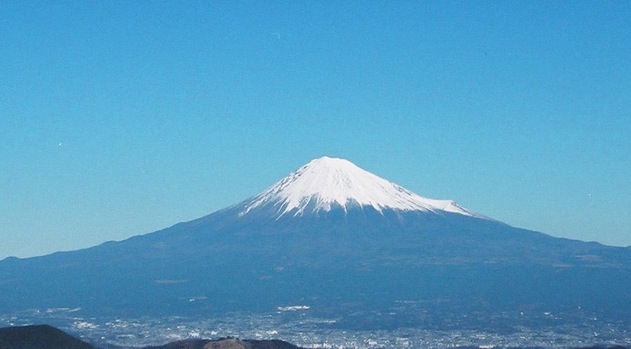
I grabbed my coworker Hamid by the arm, almost knocking him off his feet, and shrieked like a little child, 'LOOK!! It's FUJI!', and quite a few people around us laughed. But it was so majestic, towering in the distance, so beautiful. The picture above does not do it justice. Mt Fuji is about 1,000 km from Tokyo, and considering the air pollution in a city of 30 million people, it is a rare and lucky occasion like this morning that one is able to see the majestic view with no smog, fog or clouds. It was, in a word, perfect. I can't wait to climb it next year!
Sunday, November 05, 2006
Kokubunji Festival
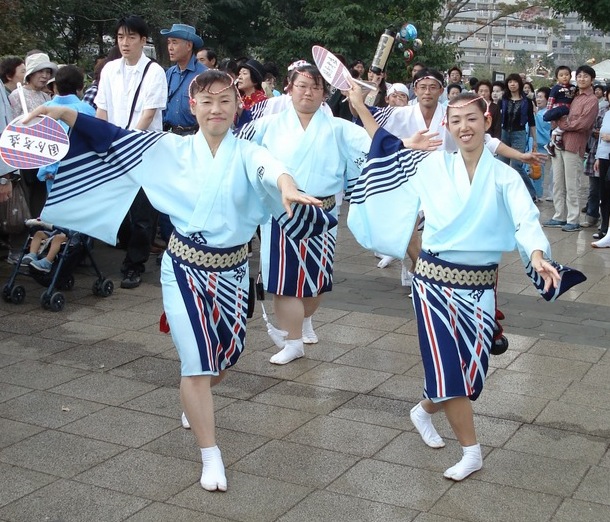
Today was just a stunningly warm autumn day, so myself and Jana jumped on our bikes and went to the nearby Kokubunji Park for the 23rd Annual Kokubunji Festival.
Like most festivals in Japan, the event consisted of traditional costumes...

dancing...

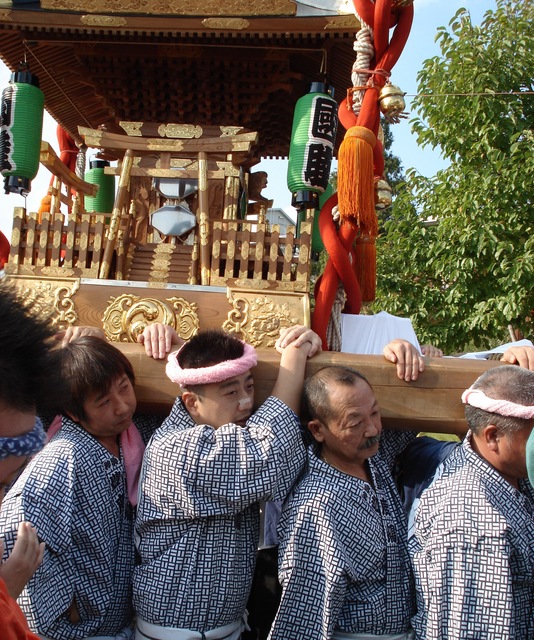
the carrying of floats from the local shrines...

masks...
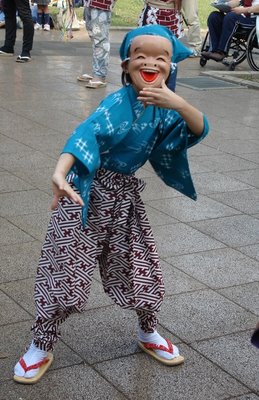
drums...

and more man-ass than anyone in their right mind cares to see!

In fact, man-ass is a normal sight at these festivals. The thong is part of a man's traditional costume, which consists of a sort of belt thing that is also looped around your bum. So loads of men are walking around ALL over the place with their rears hanging out of a tiny piece of cloth. Similiar to the style of a sumo wrestler. Yet nobody seems to bat an eyelid... except for me, who took pictures!
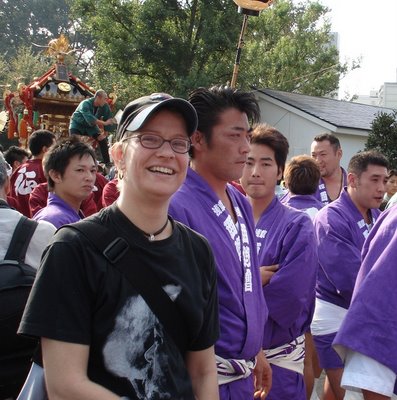
Jana is happy from seeing so much man-ass! Ha!
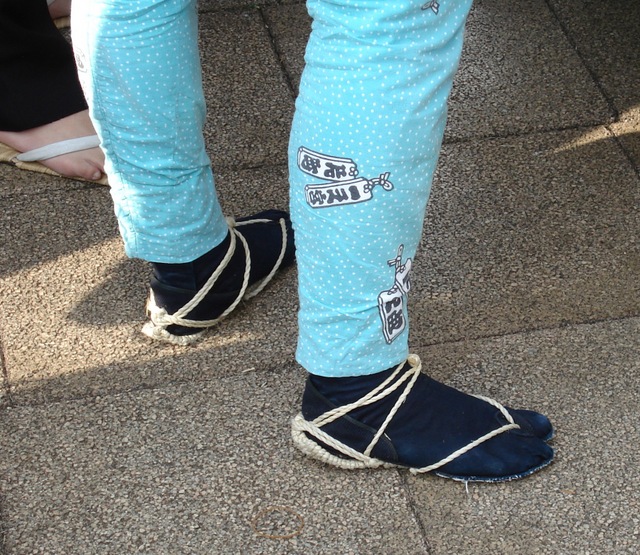
Below is a close-up of some old school slippers made of straw. Did you know that thong slippers originated in Asia? In fact, they make socks that separate your big toe from the rest of your toes so you can wear socks with flip flops. Take a close look at all of the pictures above -- almost every person is wearing the thong socks.

We saw many strange things today. These children appeared to be playing some sort of game where they catch fish with their bare hands and then put them back into the pool. But after being caught over and over, and being taken out of water again and again, the fish of course were going half dead and were not very difficult to catch. But the kids were simply fascinated!

Also, dogs are certainly man's best friend in Japan (few people have cats), and it is quite normal to see dogs in sweaters, t-shirts, or even kimonos. But I think this man was taking it too far, carrying his large dog around in his arms like a small child. Jana and I dubbed him 'the dog lover'. The dog seemed quite content, actually.

After many hours of walking around the stalls, poking about at the things being eaten and drank, and getting lots of freebies from various people who were eager to practice their English, we took a seat by the pond and treated ourselves to some sake and beer.
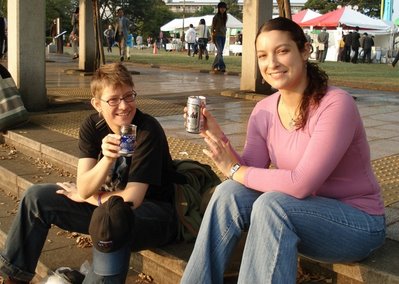
Kampai!!!!! (cheers)
Like most festivals in Japan, the event consisted of traditional costumes...

dancing...
the carrying of floats from the local shrines...
masks...

drums...
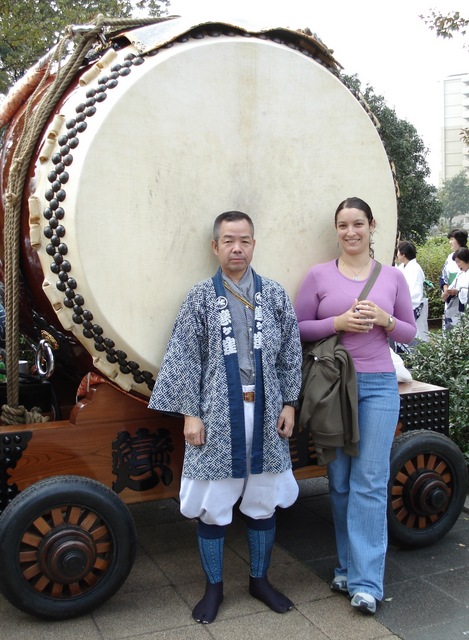
and more man-ass than anyone in their right mind cares to see!

In fact, man-ass is a normal sight at these festivals. The thong is part of a man's traditional costume, which consists of a sort of belt thing that is also looped around your bum. So loads of men are walking around ALL over the place with their rears hanging out of a tiny piece of cloth. Similiar to the style of a sumo wrestler. Yet nobody seems to bat an eyelid... except for me, who took pictures!
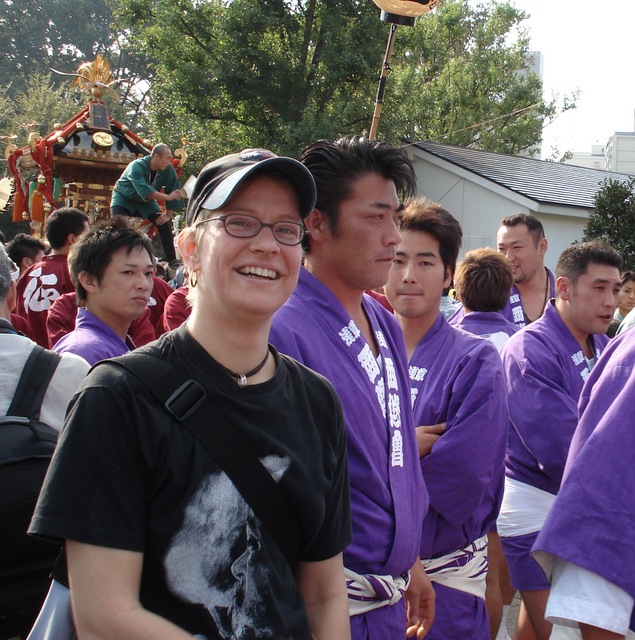
Jana is happy from seeing so much man-ass! Ha!
Below is a close-up of some old school slippers made of straw. Did you know that thong slippers originated in Asia? In fact, they make socks that separate your big toe from the rest of your toes so you can wear socks with flip flops. Take a close look at all of the pictures above -- almost every person is wearing the thong socks.
We saw many strange things today. These children appeared to be playing some sort of game where they catch fish with their bare hands and then put them back into the pool. But after being caught over and over, and being taken out of water again and again, the fish of course were going half dead and were not very difficult to catch. But the kids were simply fascinated!

Also, dogs are certainly man's best friend in Japan (few people have cats), and it is quite normal to see dogs in sweaters, t-shirts, or even kimonos. But I think this man was taking it too far, carrying his large dog around in his arms like a small child. Jana and I dubbed him 'the dog lover'. The dog seemed quite content, actually.

After many hours of walking around the stalls, poking about at the things being eaten and drank, and getting lots of freebies from various people who were eager to practice their English, we took a seat by the pond and treated ourselves to some sake and beer.
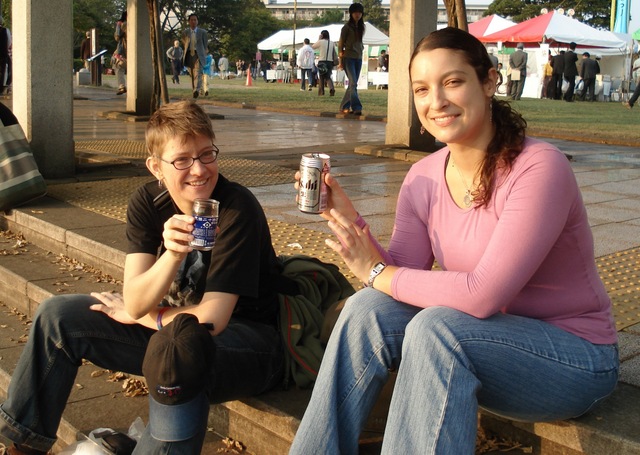
Kampai!!!!! (cheers)
Subscribe to:
Posts (Atom)